

Dialysis
Dialysis is a procedure to remove waste products and excess fluid from the blood when the kidneys stop working properly.
Reliable & Effective Test
Our mission is to provide top-quality, trustworthy, and reasonably priced diagnostic services with cutting-edge laboratory techniques that are as accurate as possible.
Instant Report
The instant and accurate diagnosis reports we provide make our service unique. Our instant and accurate report service allow patients to get their diagnostic reports easily.
Committed!
Never Fail To Exceed Expectations
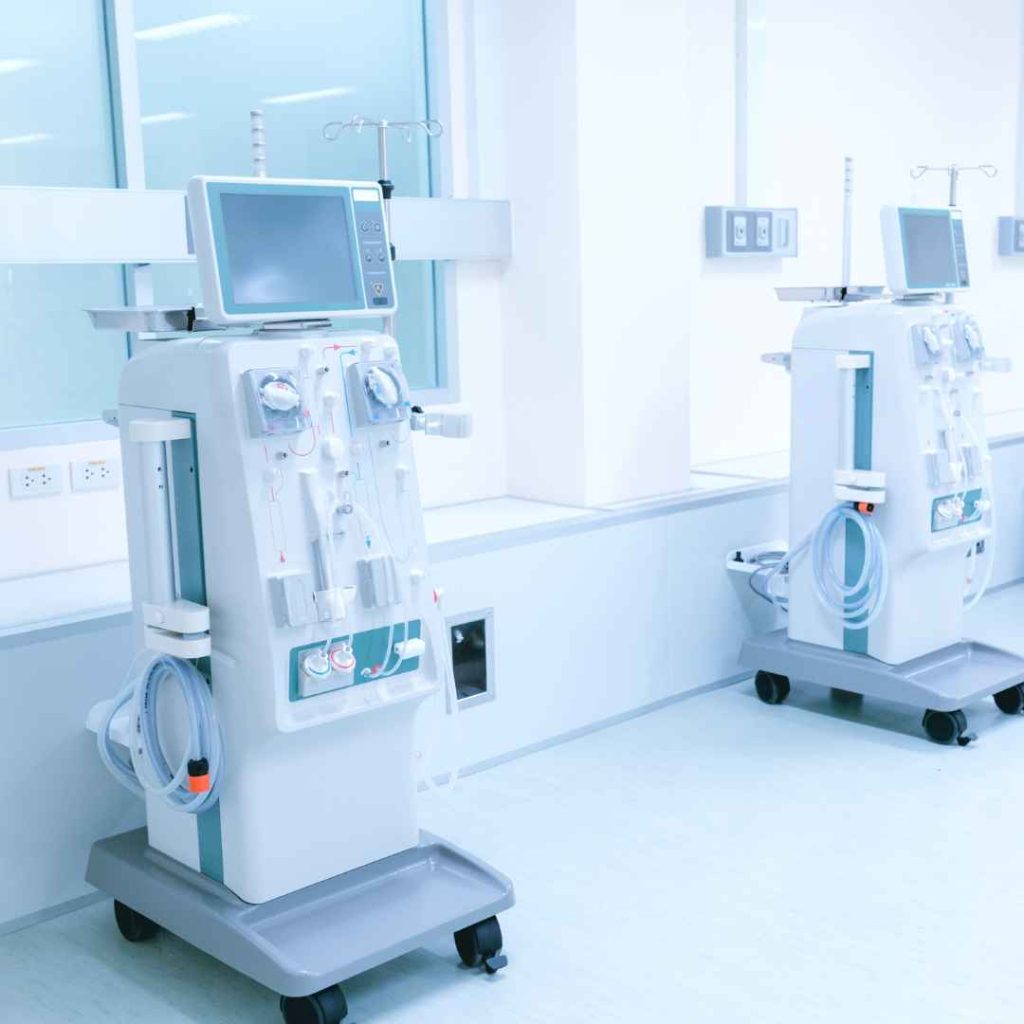
We at Nepal Mediciti Vayodha Hospital are dedicated to offering High-quality, reliable, and affordable priced hemodialysis and peritoneal dialysis. In hemodialysis, the patient’s blood is passed through an artificial kidney machine, which filters out the waste products and excess fluids. The filtered blood is then returned to the patient’s body. Hemodialysis is usually done in a hospital or dialysis center.
Dialysis is a life-sustaining treatment for patients with kidney failure, and it can help to improve their quality of life and increase their life expectancy. However, dialysis can also be a challenging treatment that requires significant lifestyle adjustments, including changes to the patient’s diet, fluid intake, and physical activity levels.
NMVH
Key features of dialysis
Dialysis is a medical treatment that replaces some of the functions of the kidneys in patients with kidney failure. The two main types of dialysis are hemodialysis and peritoneal dialysis. Here are some of the key features of dialysis:
Blood purification: Dialysis is designed to remove excess fluids, waste products, and toxins from the blood of patients with kidney failure.
Hemodialysis: In hemodialysis, the patient’s blood is passed through an artificial kidney machine, which filters out the waste products and excess fluids. The filtered blood is then returned to the patient’s body.
Peritoneal dialysis: In peritoneal dialysis, a special solution is introduced into the patient’s abdominal cavity, where it helps to remove waste products and excess fluids through the peritoneal membrane.
Frequency of treatment: The frequency of dialysis treatment varies depending on the individual patient’s needs, but most patients require several treatments per week.
Duration of treatment: Dialysis treatments typically last several hours, and patients may need to stay at a dialysis center or hospital for the duration of the treatment.
Lifestyle adjustments: Dialysis can require significant lifestyle adjustments, such as changes to the patient’s diet, fluid intake, and physical activity levels.
Side effects: Dialysis can cause side effects, including fatigue, muscle cramps, low blood pressure, and infection. However, with appropriate medical management and support, these side effects can be managed effectively.
Lifesaving treatment: For patients with kidney failure, dialysis can be a lifesaving treatment that helps to maintain their health and wellbeing while they wait for a kidney transplant or as a long-term treatment option if a transplant is not possible.
Overall, dialysis is a critical medical treatment that helps to maintain the health and wellbeing of patients with kidney failure. With appropriate medical management and support, many patients are able to continue living full and active lives while receiving dialysis treatments.